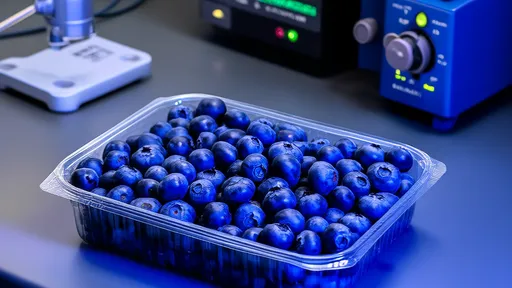
The preservation of fresh produce has long been a challenge for the food industry, particularly when it comes to delicate fruits like blueberries. Among the various methods employed, modified atmosphere packaging (MAP) has emerged as a promising solution to extend shelf life while maintaining quality. One critical aspect of MAP is respiratory inhibition—slowing down the fruit's metabolic activity to delay ripening and decay. Blueberries, with their high respiration rate, are particularly sensitive to atmospheric conditions, making the optimization of gas composition a key factor in successful preservation.
Understanding Respiratory Inhibition in Blueberries
Respiration is a natural process in fruits, involving the breakdown of sugars and the release of carbon dioxide, water, and heat. For blueberries, a high respiration rate accelerates spoilage, leading to softening, mold growth, and loss of flavor. Modified atmosphere packaging works by altering the surrounding gas composition—typically reducing oxygen (O₂) and increasing carbon dioxide (CO₂)—to suppress respiration. This controlled environment slows metabolic activity without completely halting it, thereby extending the fruit's postharvest life.
The challenge lies in finding the right balance. Too little oxygen can lead to anaerobic respiration, causing off-flavors and ethanol buildup, while excessive carbon dioxide may result in tissue damage. Research suggests that for blueberries, an optimal range of 5-10% O₂ and 15-20% CO₂ effectively inhibits respiration without compromising quality. However, these values can vary depending on factors such as cultivar, ripeness at harvest, and storage temperature.
The Role of Gas Permeability in Packaging Materials
Selecting the right packaging material is just as crucial as determining the gas composition. Films used in MAP must allow for controlled gas exchange to maintain the desired atmosphere. Polyethylene and polypropylene are commonly used due to their moderate permeability, but newer materials with tailored gas transmission rates are being explored. For blueberries, a film with high CO₂ permeability is often preferred to prevent gas buildup that could damage the fruit.
Another consideration is the film's water vapor transmission rate. Blueberries are prone to moisture loss, which leads to shriveling. A packaging material that minimizes water loss while permitting adequate gas exchange is ideal. Some advanced films incorporate micro-perforations or nanocomposites to achieve this balance, though these technologies come with higher costs and production complexities.
Temperature's Influence on MAP Efficacy
While MAP parameters are critical, storage temperature plays an equally important role in respiratory inhibition. Blueberries are typically stored at 0-5°C to reduce metabolic activity. However, temperature fluctuations can disrupt the carefully balanced atmosphere inside the package. For instance, a rise in temperature increases respiration rates, leading to faster O₂ depletion and CO₂ accumulation—potentially pushing the fruit into anaerobic conditions.
Some studies suggest dynamic MAP systems that adjust gas composition in response to temperature changes. These intelligent packaging solutions, though still in development, could revolutionize blueberry preservation by ensuring optimal conditions throughout the supply chain. Until then, maintaining a consistent cold chain remains the most practical approach to supporting MAP effectiveness.
Challenges in Commercial Implementation
Despite the proven benefits of MAP for blueberries, widespread adoption faces hurdles. One major issue is the variability in fruit response. Different blueberry cultivars exhibit distinct respiratory patterns, making it difficult to establish universal packaging parameters. Small-scale producers, in particular, may lack the resources to fine-tune MAP for their specific products.
Another challenge is cost. Modified atmosphere packaging requires specialized equipment for gas flushing and sealing, adding to production expenses. While larger operations can absorb these costs, smaller growers may find the investment prohibitive. Additionally, consumer preferences for sustainable packaging complicate the picture, as many MAP materials are not easily recyclable.
Future Directions in Blueberry MAP
Innovations in packaging technology continue to push the boundaries of what's possible in respiratory inhibition. Active packaging systems, which incorporate oxygen scavengers or CO₂ emitters, offer more precise atmospheric control than passive MAP. Edible coatings, often derived from natural polymers like chitosan, provide an additional barrier to gas exchange while being environmentally friendly.
Research is also exploring the use of predictive modeling to optimize MAP parameters. By analyzing data on respiration rates, temperature sensitivity, and quality degradation, scientists aim to develop customized packaging solutions for different blueberry varieties and supply chain conditions. As these technologies mature, they could make MAP more accessible and effective for producers of all sizes.
The intersection of respiratory science and packaging engineering holds great promise for the future of blueberry preservation. By continuing to refine gas compositions, materials, and storage protocols, the industry can reduce waste and deliver fresher, longer-lasting berries to consumers worldwide.
The global mango industry faces persistent challenges in maintaining fruit quality during storage and transportation. Among the most pressing issues is the rapid ripening and subsequent spoilage caused by ethylene gas, a natural plant hormone that accelerates maturation. Traditional preservation methods often fall short, but recent innovations in activated carbon technology offer promising solutions for extending mango shelf life while reducing post-harvest losses.
Activated carbon has emerged as an unexpected ally in the battle against premature mango ripening. This highly porous material, typically associated with water filtration and air purification, demonstrates remarkable ethylene adsorption capabilities when properly modified. Researchers have discovered that specific surface treatments can enhance activated carbon's affinity for ethylene molecules, creating an effective scavenger system that removes this ripening trigger from storage environments. Unlike chemical inhibitors that may alter fruit flavor, activated carbon operates through purely physical adsorption, preserving the mango's natural taste profile.
The science behind this application reveals fascinating details about molecular interactions. Activated carbon contains an extensive network of micropores that create enormous surface areas - often exceeding 1,000 square meters per gram. When mangoes respire and release ethylene during storage, these pores trap the gas molecules through weak van der Waals forces. Advanced formulations now incorporate metal-organic frameworks (MOFs) within the carbon structure to improve selectivity for ethylene over other atmospheric gases. This targeted approach maintains optimal storage conditions without creating oxygen-deficient environments that could harm fruit quality.
Practical implementations in commercial settings have demonstrated significant benefits. Packing houses in major mango-producing regions now integrate activated carbon sachets into shipping containers and storage facilities. These breathable packets, typically placed between fruit layers in cartons, continuously remove ethylene throughout the supply chain. Field tests show that treated mangoes maintain firmness 30% longer than control groups while delaying color changes associated with over-ripening. The technology proves particularly valuable for sea shipments, where extended transit times traditionally resulted in substantial spoilage before reaching distant markets.
Beyond ethylene control, activated carbon offers secondary advantages that enhance its value proposition. The material naturally absorbs volatile organic compounds that contribute to off-flavors, creating cleaner storage atmospheres. Some formulations incorporate antimicrobial agents that further protect against fungal growth. Unlike single-use chemical absorbers, certain activated carbon products can be regenerated through thermal treatment, offering cost-effective reuse potential for large-scale operators. These multifaceted benefits position the technology as a comprehensive solution rather than just an ethylene management tool.
The environmental profile of activated carbon applications warrants particular attention in today's sustainability-focused market. As a carbon-based material derived from renewable sources like coconut shells or bamboo, it aligns with circular economy principles. Modern production methods have reduced energy requirements for activation processes, lowering the overall carbon footprint. When compared to synthetic alternatives, activated carbon presents fewer end-of-life concerns as spent material can be safely composted or utilized as soil amendment. This eco-friendly characteristic resonates strongly with retailers and consumers increasingly demanding sustainable supply chain practices.
Commercial adoption nevertheless faces certain implementation challenges. Optimal loading ratios - the amount of activated carbon required per kilogram of fruit - vary significantly based on mango variety, ripeness stage at harvest, and expected storage duration. Humidity control becomes crucial, as excessive moisture can reduce adsorption efficiency. Some exporters report difficulties in achieving uniform ethylene removal throughout large containers, prompting development of improved distribution systems for the absorbent material. These practical hurdles highlight the need for customized solutions rather than one-size-fits-all approaches.
Looking ahead, researchers are exploring next-generation composites that could revolutionize mango preservation. Hybrid materials combining activated carbon with photocatalytic components show potential for continuous ethylene destruction rather than mere adsorption. Nano-engineered carbon structures promise tenfold increases in ethylene capture capacity. Smart packaging concepts integrate color-changing indicators that signal when absorbent materials require replacement. Such advancements could transform activated carbon from a passive scavenger into an active preservation system capable of dynamically responding to changing storage conditions.
The economic implications of widespread activated carbon adoption merit serious consideration. Post-harvest losses account for nearly 40% of mango production in some developing countries. Even modest extensions in shelf life can dramatically improve market access and reduce price volatility. Early adopters report 15-20% reductions in transport-related waste, translating to millions in annual savings for large exporters. As technology costs decrease through scaled production, activated carbon solutions are becoming accessible to smallholder farmers through cooperative purchasing models, potentially democratizing access to advanced preservation techniques.
Regulatory aspects present another dimension for industry attention. Unlike chemical treatments, activated carbon systems generally qualify as physical processing aids rather than food additives, simplifying compliance with international food safety standards. However, some importing countries require specific certifications for materials in direct contact with produce. The industry is responding by developing food-grade formulations with documentation trails meeting stringent EU and USDA organic program requirements. This regulatory-friendly position gives activated carbon an advantage over emerging chemical technologies facing longer approval timelines.
Implementation best practices are crystallizing as the technology matures. Leading exporters now combine activated carbon with precision temperature management for synergistic effects. The most successful operations conduct pre-shipment trials to determine ideal exposure durations - excessive ethylene removal can sometimes delay desired ripening at destination markets. Proper ventilation designs ensure uniform gas distribution while preventing moisture accumulation. These nuanced approaches demonstrate how simple materials can achieve sophisticated results when applied with scientific understanding and operational expertise.
The mango industry's embrace of activated carbon reflects broader trends in post-harvest innovation. As consumers reject synthetic preservatives and demand longer-lasting natural produce, physical intervention methods gain prominence. Activated carbon's simplicity, effectiveness, and sustainability position it as a bridge technology - solving immediate challenges while research continues on more advanced solutions. Its success may inspire similar applications for other ethylene-sensitive fruits, potentially transforming global produce supply chains. For now, this humble material is quietly revolutionizing how the world ships and stores one of its most beloved tropical fruits.
By /Jul 24, 2025

By /Jul 24, 2025
By /Jul 24, 2025
By /Jul 24, 2025

By /Jul 24, 2025
By /Jul 24, 2025

By /Jul 24, 2025
By /Jul 24, 2025
