The culinary world is no stranger to the transformative power of chemistry, and one of the most intriguing intersections of science and cooking lies in the Maillard reaction—the complex process responsible for the browning and flavor development in foods. Recently, chefs and food scientists have turned their attention to an unexpected catalyst: copper ions. In the context of French sauce preparation, particularly in classic reductions like demi-glace or bordelaise, copper’s role in accelerating browning has sparked both curiosity and innovation.
At the heart of this phenomenon is the Maillard reaction, a cascade of chemical interactions between amino acids and reducing sugars that occurs when heat is applied. While temperature and pH are well-known factors influencing this reaction, the presence of trace metals—especially copper—has emerged as a less obvious but potent variable. Copper ions, even in minute concentrations, act as catalysts, lowering the activation energy required for the Maillard reaction to proceed. This means that sauces simmered in copper pots or exposed to copper-containing ingredients may develop richer color and deeper flavor profiles in significantly less time.
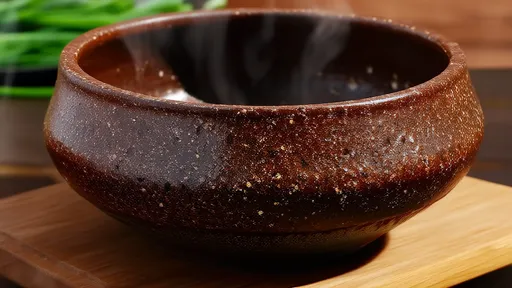
The historical use of unlined copper cookware in French kitchens now appears prescient. Long before modern science explained why, chefs observed that sauces reduced in copper pans achieved a superior fond (the prized browned bits) compared to those prepared in iron or stainless steel vessels. Contemporary research suggests that copper’s catalytic properties stem from its ability to oscillate between oxidation states (Cu⁺ and Cu²⁺), facilitating electron transfer reactions that drive the Maillard process forward. This redox activity is particularly effective in the slightly acidic environments typical of wine-based sauces, where copper ions remain soluble and biologically available.
However, the relationship between copper and browning isn’t without nuance. Excessive copper concentrations can lead to undesirable outcomes, including metallic off-flavors or overly rapid degradation of delicate aromatic compounds. The threshold for optimal catalysis appears to hover around 0.1 to 0.5 ppm (parts per million)—a range naturally achieved through the gradual leaching of copper from unlined cookware during prolonged simmering. This delicate balance underscores why professional kitchens often reserve aged copper saucepans specifically for reductions, as their patina and mineral deposits create a self-regulating system.
Beyond cookware, ingredients themselves can introduce copper ions into the equation. Organ meats like duck liver or foie gras, staples in many French sauces, contain relatively high levels of copper-binding proteins. When these ingredients are incorporated, they may synergize with copper cookware to create a feedback loop of accelerated browning. Even humble aromatics like shallots and garlic contribute sulfur compounds that interact with copper ions, potentially modifying the Maillard pathway to produce more complex flavor molecules.
Modernist chefs have begun experimenting with controlled copper supplementation, adding food-safe copper salts or copper-infused tools to achieve precise catalytic effects. One avant-garde technique involves suspending a copper mesh sachet in a reducing sauce, allowing for consistent ion release without risking over-concentration. Such approaches blur the line between traditional craftsmanship and molecular gastronomy, offering new ways to honor classic French techniques while embracing scientific understanding.
Health considerations remain paramount when working with copper in food preparation. While the small amounts leached from cookware fall well within safe consumption limits, regulatory bodies like the FDA provide strict guidelines for copper exposure. Professional kitchens must balance the pursuit of perfect browning with food safety protocols, often opting for lined copper cookware when preparing acidic foods for extended periods. This precaution prevents excessive copper migration while still harnessing the metal’s catalytic benefits.
The implications of copper-ion catalysis extend beyond French cuisine. From caramel production in confectionery to the development of umami-rich stocks in Asian cooking, controlled browning represents a universal culinary challenge. As research continues to unravel the intricacies of metal-ion interactions in food chemistry, chefs worldwide may soon have a new toolkit for manipulating the Maillard reaction—with copper playing a starring role.
In an era where time is often the scarcest ingredient in professional kitchens, the ability to accelerate flavor development without compromising quality holds tremendous value. The rediscovery of copper’s catalytic properties serves as a reminder that sometimes, the most groundbreaking culinary innovations come not from high-tech equipment, but from revisiting—and finally understanding—the wisdom embedded in centuries-old practices.
For many people grappling with anxiety, finding immediate relief during an attack can feel like an insurmountable challenge. The racing thoughts, shortness of breath, and overwhelming sense of dread often leave individuals searching for quick, tangible solutions. One unconventional yet increasingly popular tool is the humble hand grip strengthener, or grip trainer. Originally designed for athletes and musicians to build hand strength, this simple device has found an unexpected role in anxiety management. Its effectiveness lies not in magic, but in the physiological and psychological mechanisms it engages when panic strikes.
The connection between physical tension and mental stress is well-documented. When anxiety peaks, the body enters a fight-or-flight response, flooding the system with adrenaline and cortisol. Muscles tense, palms sweat, and the mind struggles to regain control. This is where the grip trainer comes into play. The repetitive squeezing motion creates a focal point for the mind, diverting attention from spiraling thoughts. The physical exertion also helps discharge some of the pent-up energy that accompanies anxiety, providing a harmless outlet for the body’s stress response.
What makes the grip trainer particularly useful is its accessibility and discretion. Unlike meditation or deep breathing exercises—which require practice and can be difficult to execute mid-panic—the act of squeezing a small device is intuitive and can be done anywhere. Whether in a crowded subway, during a work meeting, or lying awake at night, the grip trainer offers a silent, unobtrusive way to ground oneself. The rhythmic compression and release mimic the principles of progressive muscle relaxation, a proven technique for reducing anxiety by systematically tensing and relaxing muscle groups.
Beyond distraction, the grip trainer taps into the body’s proprioceptive system—the sense that helps us perceive movement and spatial orientation. This system plays a crucial role in self-regulation. When the brain receives consistent feedback from the muscles and joints, it can recalibrate the nervous system, dialing down the intensity of the anxiety response. In essence, the grip trainer acts as a physical anchor, pulling the mind back into the present moment and away from catastrophic thinking.
Not all grip trainers are equally suited for anxiety relief, however. Devices that are too stiff or require excessive force might exacerbate tension rather than alleviate it. Experts recommend starting with a medium-resistance model that allows for sustained, comfortable use without straining the hands. The goal isn’t to build strength but to create a soothing, repetitive motion that engages both the body and mind. Some users even pair grip training with mindful breathing, synchronizing each squeeze with an inhale or exhale to deepen the calming effect.
The science behind this practice is still emerging, but anecdotal evidence abounds. Many individuals report that the grip trainer serves as a "panic button"—a reliable tool to turn to when other coping mechanisms fail. Unlike medication or therapy, which address anxiety over the long term, the grip trainer provides immediate, on-the-spot relief. It doesn’t replace professional treatment, but it can complement existing strategies, offering a portable lifeline during moments of acute distress.
Critics might argue that the grip trainer is merely a placebo, a psychological crutch with no real therapeutic value. Yet for those who experience its benefits, the distinction hardly matters. If a simple device can interrupt the cycle of panic and restore a sense of control, its practicality outweighs theoretical debates. After all, anxiety management is deeply personal, and what works for one person may not work for another. The grip trainer is just one more tool in the arsenal—a small but potent ally in the battle against anxiety.
For anyone considering this approach, the key is experimentation. Try different resistance levels, durations, and techniques to find what feels most soothing. Pair the grip trainer with other grounding methods, such as naming objects in the room or focusing on sensory details. Over time, the combination of physical engagement and mental redirection can create a powerful buffer against anxiety’s grip. In a world where stress is inevitable, having a pocket-sized escape hatch can make all the difference.
By /Jul 24, 2025
By /Jul 24, 2025

By /Jul 24, 2025
By /Jul 24, 2025
By /Jul 24, 2025
By /Jul 24, 2025
By /Jul 24, 2025
By /Jul 24, 2025
