The frozen food industry has long grappled with the challenge of preserving food texture and quality during storage and transportation. Among the most delicate products are quick-frozen dumplings, where the management of ice crystals plays a pivotal role in determining the final product quality. Recent advancements in cryogenic technology have demonstrated that maintaining dumplings at -35°C can induce a glassy state that fundamentally changes how we approach frozen food preservation.
The Science Behind Glass Transition in Frozen Foods
When water undergoes freezing within food matrices, it doesn't simply transform into ice. The complex interplay between water molecules and food components creates a dynamic system where crystal formation can either preserve or destroy texture. At conventional freezer temperatures (-18°C), ice crystals continue to grow and recrystallize, damaging cell structures. However, when temperatures plunge to -35°C and below, something remarkable occurs - the system enters what physicists call the glass transition state.
In this glassy state, molecular motion slows to near standstill. Water molecules lose their ability to rearrange into crystalline structures, effectively freezing the food's microstructure in time. For dumplings, this means the delicate balance between wrapper and filling is preserved exactly as it was at the moment of freezing. The dough maintains its elasticity, while the filling's juices remain suspended in their original distribution rather than forming disruptive ice crystals.
Industrial Implementation Challenges
Transitioning from laboratory findings to industrial-scale production presents numerous hurdles. The first lies in achieving rapid and uniform cooling throughout the product. Traditional blast freezers often create temperature gradients, with the dumpling exterior cooling faster than the core. Modern spiral freezers with precise airflow control and cryogenic nitrogen injection systems have shown promise in overcoming this limitation.
Another critical factor is the formulation of the dumpling itself. The water content and its binding with proteins and carbohydrates significantly affect how the system behaves during cooling. Food scientists have developed specialized flour blends with modified starch profiles that enhance glass formation while maintaining the desired mouthfeel after reheating. Similarly, fillings now often include natural cryoprotectants like trehalose or specific protein hydrolysates that inhibit ice crystal growth even during temperature fluctuations.
Energy Considerations and Sustainability
The obvious drawback of -35°C storage is the increased energy demand. However, modern refrigeration systems have made significant strides in efficiency. Cascade refrigeration systems using CO2 as a secondary refrigerant have shown particular promise, with some facilities reporting energy savings of up to 30% compared to conventional systems. Additionally, the extended shelf life and reduced product loss often offset the higher operational costs.
Some forward-thinking manufacturers have begun integrating renewable energy sources with thermal storage systems. Solar-powered freezing facilities in sun-rich regions can produce ice during daylight hours that helps maintain low temperatures overnight. These innovations point toward a future where ultra-low temperature food preservation can be both quality-focused and environmentally responsible.
Quality Outcomes and Consumer Perception
The sensory differences between conventionally frozen and glass-state dumplings are immediately apparent upon cooking. Products preserved at -35°C exhibit wrapper textures nearly indistinguishable from fresh, with no signs of the sogginess or cracking that often plagues frozen varieties. Fillings retain their juiciness and structural integrity, with meat particles maintaining better bite and vegetable components showing brighter colors and crisper textures.
Consumer trials have revealed interesting psychological effects as well. When presented side-by-side with identical recipes frozen at different temperatures, test groups consistently rated the -35°C samples higher across all sensory parameters, even when unaware of the freezing conditions. This suggests that the textural improvements translate directly to perceived quality, potentially allowing manufacturers to command premium pricing.
Microbiological Advantages Beyond Texture
While texture preservation drives much of the interest in glass-state freezing, the microbiological benefits shouldn't be overlooked. At -35°C, not only is microbial growth completely halted, but the viability of existing microorganisms decreases more rapidly than at higher freezing temperatures. Studies have shown significant reductions in viable counts of common spoilage organisms after storage at glass transition temperatures compared to standard frozen storage.
This has important implications for food safety, particularly with products containing raw components in their fillings. The enhanced microbial stability also allows for extended best-before dates without compromising safety, reducing food waste throughout the supply chain. Some manufacturers are now exploring how these extended shelf lives might enable new distribution models, including direct-to-consumer frozen food subscriptions.
Future Directions in Glass-State Freezing
Emerging research points to even more sophisticated applications of these principles. Some laboratories are experimenting with variable-rate freezing protocols that optimize crystal management by carefully controlling the temperature descent curve. Others are investigating how high-pressure processing might synergize with ultra-low temperatures to create even more stable glass states at slightly higher temperatures.
Another promising avenue involves the use of electromagnetic field-assisted freezing. Preliminary results suggest that carefully tuned electromagnetic pulses can influence water molecule orientation during freezing, potentially enhancing glass formation while reducing energy requirements. While these technologies remain in development, they hint at a future where frozen dumplings could rival fresh products in quality while offering unparalleled convenience.
The journey from traditional freezing methods to precision glass-state preservation represents more than just a technical upgrade - it's a fundamental rethinking of how we approach food preservation. As these technologies mature and become more accessible, consumers worldwide may soon enjoy frozen dumplings that defy all expectations of what frozen food can be.
The natural world has long been a source of inspiration for scientific innovation, and nowhere is this more evident than in the development of antimicrobial coatings derived from citrus fruit waxes. Researchers are increasingly turning to these natural compounds as sustainable alternatives to synthetic preservatives, unlocking their potential to revolutionize food preservation, medical applications, and surface protection technologies.
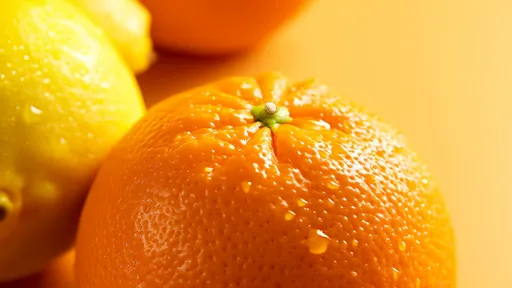
Citrus fruits come equipped with their own sophisticated protective system—a waxy coating that serves as both a moisture barrier and a defense against microbial invaders. This natural armor has evolved over millennia to shield the fruit from environmental stressors while maintaining its freshness. Scientists have discovered that these waxes contain unique bioactive compounds with remarkable antimicrobial properties, offering a green solution to contamination challenges across multiple industries.
The extraction and formulation process of these citrus-derived coatings involves careful optimization to preserve their bioactive properties. Cold-pressing methods and solvent-free extraction techniques yield waxes rich in limonoids, flavonoids, and fatty acids—all known for their antimicrobial activity. When properly formulated, these compounds create a microscopic barrier that disrupts bacterial cell membranes while remaining completely food-safe and biodegradable.
Food preservation represents one of the most promising applications for citrus wax coatings. Unlike conventional wax coatings that merely provide a physical barrier, these bioactive formulations actively inhibit the growth of common foodborne pathogens. Studies have demonstrated significant reductions in E. coli, Salmonella, and Listeria populations on treated produce, potentially extending shelf life while reducing the need for chemical sanitizers.
Beyond the food industry, medical researchers are exploring citrus wax coatings for antimicrobial surface treatments in healthcare settings. The non-toxic nature of these compounds makes them particularly attractive for use in hospitals, where they could help combat antibiotic-resistant bacteria without contributing to the growing problem of antimicrobial resistance. Early trials show promise in creating self-sanitizing surfaces that remain effective through multiple cleaning cycles.
Environmental advantages set citrus wax coatings apart from conventional antimicrobial solutions. As completely biodegradable substances derived from agricultural byproducts, they offer a circular economy solution to waste management. Citrus processing generates massive amounts of peel waste annually—material that could be transformed into valuable antimicrobial products rather than ending up in landfills.
The commercial scalability of these coatings presents both opportunities and challenges. While laboratory results are promising, translating them to industrial-scale production requires careful consideration of consistency, application methods, and cost-effectiveness. Spray application technologies and dip-coating systems are being adapted to accommodate the unique viscosity and drying characteristics of citrus wax formulations.
Consumer acceptance plays a crucial role in the adoption of these natural antimicrobial solutions. Market research indicates strong preference for plant-based, non-toxic alternatives to synthetic preservatives, particularly in food applications. Clear labeling and education about the natural origin and safety of citrus wax coatings will be essential for widespread adoption.
Regulatory hurdles must be navigated as these novel coatings enter various markets. While generally recognized as safe (GRAS) for food contact applications, specific antimicrobial claims require thorough validation and approval processes. The scientific community continues to compile the necessary data to support these applications through rigorous testing and peer-reviewed studies.
Looking ahead, researchers are exploring synergistic combinations of citrus waxes with other natural antimicrobials like essential oils or chitosan. These hybrid formulations could offer enhanced protection against a broader spectrum of microorganisms while maintaining the environmental benefits of plant-based ingredients. The potential to tailor coatings for specific applications—from fresh produce to medical devices—makes this an exciting area of development.
The development of citrus-based antimicrobial coatings represents a convergence of ancient wisdom and modern science. By harnessing the protective power evolved in nature, researchers are creating solutions that address pressing challenges in food safety, healthcare, and environmental sustainability. As this technology matures, it promises to deliver effective protection without the ecological drawbacks of conventional antimicrobial approaches.
Ongoing research continues to uncover new dimensions of citrus wax functionality. Recent studies suggest these coatings may offer additional benefits such as antioxidant activity and enhanced physical protection against bruising or moisture loss. The multifunctional nature of these natural coatings makes them particularly valuable for applications where multiple protective qualities are desired.
Investment and commercialization efforts are accelerating as the potential of citrus wax coatings becomes increasingly apparent. Startups and established companies alike are racing to develop proprietary formulations and application technologies. Partnerships between academic institutions, agricultural producers, and manufacturing companies are forming to bring these innovations to market.
As with any emerging technology, questions remain about long-term performance, large-scale efficacy, and economic viability. However, the fundamental advantages of citrus wax coatings—their natural origin, biodegradability, and multifunctional properties—suggest they will play an important role in the future of antimicrobial solutions across multiple industries.
By /Jul 24, 2025
By /Jul 24, 2025
By /Jul 24, 2025
By /Jul 24, 2025
By /Jul 24, 2025
By /Jul 24, 2025
By /Jul 24, 2025
By /Jul 24, 2025
