The art of slow cooking in earthenware pots traces back thousands of years, yet modern science is only beginning to unravel why clay vessels like sand pots produce such uniquely concentrated flavors in soups and stews. Unlike metal or enamel cookware, the microscopic pores in traditional sand pots create a dynamic cooking environment where heat, moisture, and flavor compounds interact in ways that elevate humble ingredients into something extraordinary.
At the heart of this phenomenon lies the unglazed clay's porous structure. When examined under magnification, the surface reveals a labyrinth of microscopic channels – some as narrow as a few micrometers – that behave like a biological membrane during cooking. As the liquid inside heats up, steam and volatile aroma molecules penetrate these pores, only to be drawn back into the broth as temperatures fluctuate. This continuous exchange acts as a natural flavor recycler, preventing the loss of delicate top notes that typically evaporate in conventional pots.
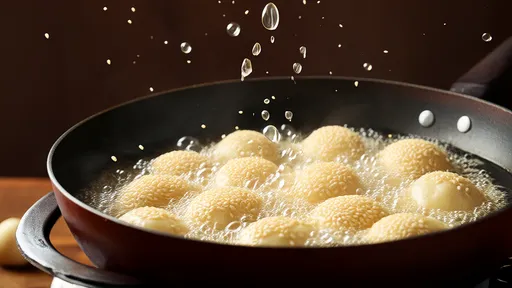
The physics of porous cooking becomes particularly fascinating when observing bubble formation. In metal pots, vapor bubbles release explosively at nucleation sites, carrying away aromatic compounds. Sand pots, however, demonstrate smaller, more frequent bubble releases due to their rough microporous surface. This gentler ebullition allows for better retention of sulfur-containing compounds from alliums and cruciferous vegetables – the very molecules responsible for complex umami and savory depth.
Chefs specializing in traditional Chinese lao huo liang tang (old fire soup) note another peculiarity: sand pots seem to "remember" flavors across uses. The pores gradually accumulate trace amounts of oils and soluble compounds from previous cookings, creating a patina that subtly seasons new preparations. This built-up seasoning differs fundamentally from cast iron's polymerized layers, functioning more like the biological cultures in sourdough starters or fermentation crocks.
Modern laboratories have measured surprising thermal behaviors in these vessels. Using infrared imaging, researchers observed that while metal pots develop hot spots exceeding 100°C at the base, sand pots maintain more even temperatures between 92-97°C throughout. This narrow window happens to be ideal for breaking down collagen into gelatin while preserving heat-sensitive nutrients. The pores contribute to this regulation through evaporative cooling – as moisture exits through microscopic channels, it prevents localized overheating that could scorch delicate ingredients.
Flavor concentration reaches its peak during the cooling phase. As the pot rests off heat, the porous walls continue wicking broth to the exterior surface where slight evaporation occurs. This creates a gentle vacuum effect that draws intensified flavors back into the remaining liquid. Food chemists have measured up to 18% higher concentrations of glutamates and nucleotides in sand-pot soups compared to identical preparations in stainless steel.
The material's interaction with acidity presents another dimension. Clay's natural alkalinity buffers the tartness of tomatoes or vinegar, allowing cooks to use larger quantities without overwhelming the palate. This explains why sand-pot tomato-based broths develop such remarkable sweetness – the pores moderate pH shifts while the extended cooking caramelizes sugars that would otherwise turn harsh in metal vessels.
Traditional potters guard secrets about regional clays that produce the best cooking vessels. Jiangxi province's zi sha (purple sand) contains unique mineral composites that some chefs swear impart a detectable minerality to broths. Laboratory analysis reveals these clays contain higher levels of iron oxide and potassium feldspar, which may catalyze Maillard reactions during prolonged simmering.
Contemporary chefs are rediscovering these ancient vessels not as rustic relics, but as precision instruments for flavor development. In professional kitchens, sand pots now share counter space with sous vide machines and rotary evaporators – different technologies pursuing the same goal of flavor purity. The humblest clay pot, it seems, had mastered molecular gastronomy centuries before the term existed.
As home cooks seek ways to deepen flavors without relying on artificial enhancers, the physics of porous cookware offers compelling solutions. That satisfying umami richness in grandmas' recipes may have less to do with secret ingredients than with the forgotten science of microporous clay – where every invisible channel serves as a flavor amplifier, turning water into nectar through patience and ancient material wisdom.
The art of caramelization is as much science as it is culinary craft. When sugar transforms under heat, it undergoes a complex series of chemical reactions that yield rich flavors and deep colors—a process both revered and feared by chefs and confectioners alike. Understanding the temperature thresholds during this transformation isn’t just academic; it’s the difference between a perfectly amber glaze and a bitter, burnt disaster.
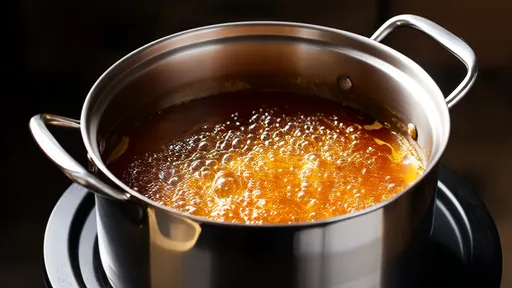
At its core, caramelization is the pyrolysis of sugar. As sucrose breaks down, it produces hundreds of new compounds, each contributing to flavor, aroma, and color. The process begins subtly around 320°F (160°C), where sugars start to melt and turn pale gold. This is the stage where delicate notes of butter and cream emerge—ideal for light sauces or glazes. But venture beyond 340°F (171°C), and the sugar takes on a more assertive personality. The color deepens to a warm amber, and flavors grow more complex, with hints of toasted nuts and dried fruit.
The danger zone arrives swiftly. Around 356°F (180°C), the sugar’s transformation accelerates. What was once a controlled reaction can quickly spiral into chaos. The line between a richly flavored caramel and an acrid, inedible mass is thin. Professional kitchens rely on precision thermometers, but even then, external factors—humidity, the type of pan, or the heat source—can skew results. A stainless steel pan distributes heat differently than copper, and a gas flame reacts faster than induction. These variables demand vigilance.
One of the lesser-discussed challenges is the sugar’s residual heat. Even after removing the pot from the burner, the molten mass continues to cook. This thermal carryover can push the caramel past its intended stage if not accounted for. Seasoned pastry chefs often employ the "cold bowl" technique—transferring the hot sugar to a chilled container to halt the reaction. Others add a splash of cream or butter, not just for flavor, but to rapidly lower the temperature.
The color spectrum of caramel is a visual language unto itself. A light honey hue suggests mild sweetness, while a deep mahogany signals intensity. But color can deceive. Due to the Maillard reaction—often confused with caramelization—proteins in dairy or other additives may darken the mixture prematurely. Pure sucrose caramelizes differently than fructose or glucose, which burn at lower temperatures. This is why many recipes call for a combination of sugars, balancing stability with flavor development.
Industrial applications take these principles to extremes. In commercial candy production, sugar is often heated to 375°F (190°C) or higher, requiring specialized equipment to prevent scorching. The margin for error is razor-thin; a few degrees can alter texture, viscosity, and shelf life. Some large-scale manufacturers use computerized systems to monitor the sugar’s browning in real time, adjusting heat inputs dynamically. Yet even with technology, the human element remains critical. Experienced technicians still taste and visually inspect batches, trusting their senses alongside sensors.
For home cooks, the stakes may be lower, but the frustration is real. A failed caramel can derail an entire dessert. The key lies in patience and preparation. Using a heavy-bottomed pan to prevent hot spots, avoiding stirring once the sugar dissolves (which can cause crystallization), and having an ice bath ready as an emergency brake—all这些小技巧 can mean the difference between success and starting over. And sometimes, embracing imperfection leads to discovery. A slightly overdone caramel might not work for flan, but it could elevate a savory barbecue sauce with its smoky depth.
Beyond the kitchen, caramelization’s principles find unexpected applications. Coffee roasters apply similar temperature awareness when developing beans’ flavor profiles. Brewers manipulate sugar stages in beer-making for varying degrees of malt sweetness. Even pharmaceutical companies study caramelization to prevent sugar-based medications from degrading during sterilization. The humble process of browning sugar resonates across disciplines, a testament to its fundamental role in chemistry and culture.
Mastering caramel is as much about respecting its volatility as it is about controlling it. There’s a reason professional pastry chefs speak of caramel with a mix of reverence and wariness. It obeys the laws of thermodynamics with brutal honesty, offering no second chances once the line is crossed. Yet when handled with knowledge and care, it transforms the ordinary into the extraordinary—a alchemy of heat and sugar that continues to captivate and challenge.
By /Jul 24, 2025
By /Jul 24, 2025
By /Jul 24, 2025
By /Jul 24, 2025
By /Jul 24, 2025

By /Jul 24, 2025
By /Jul 24, 2025
By /Jul 24, 2025
