The modern world bombards us with choices. From the moment we wake up to the second we fall asleep, we're forced to make decisions - what to wear, what to eat, how to respond to emails, when to schedule meetings. This constant cognitive load leads to a phenomenon called decision fatigue, where our ability to make quality choices deteriorates after prolonged periods of decision-making. Neuroscientists have discovered that decision fatigue isn't just psychological; it manifests as actual neural exhaustion in the prefrontal cortex, the brain's executive function center.
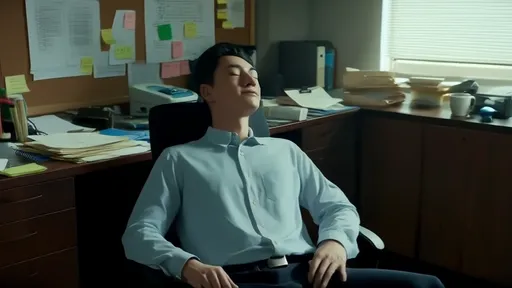
Enter the intriguing concept of eyes-closed reset, an emerging cognitive restoration technique gaining traction among high performers. This method doesn't require expensive equipment, complicated training, or significant time investment. Its power lies in its simplicity - strategically closing one's eyes at key moments to short-circuit decision fatigue. While it might sound too basic to be effective, the physiological mechanisms behind this practice reveal why it works so remarkably well.
Visual processing consumes an enormous amount of neural resources. Our eyes serve as the primary data collection system for the brain, funneling millions of bits of information every minute. When we keep our eyes open, even in familiar environments, our visual cortex remains engaged in constant low-level processing. This background activity subtly drains cognitive reserves that could otherwise support better decision-making. Closing the eyes creates an immediate neural off-ramp, allowing overworked executive functions to momentarily disengage from environmental demands.
The eyes-closed reset technique goes beyond simple rest breaks. It's about creating micro-moments of sensory deprivation precisely when decision fatigue starts creeping in. Many report that practicing this method at strategic intervals throughout the day helps maintain decision-making clarity comparable to morning freshness. The timing varies by individual, but most benefit from 30-60 second applications every 90-120 minutes during intensive cognitive work.
Research suggests the technique works through multiple pathways. First, eliminating visual input reduces cognitive load by approximately 10-15%, according to functional MRI studies. Second, darkness triggers mild parasympathetic nervous system activation, lowering cortisol and adrenaline levels. Third, the brief sensory reduction allows the default mode network - crucial for insight and creativity - to briefly activate. Together, these effects create a neural refresh more potent than its duration might suggest.
Practical application requires more nuance than simply shutting one's eyes randomly. The most effective practitioners combine the physical act with specific mental postures. Some focus on slow, deliberate breathing during the reset. Others use the moment to mentally step back from immediate concerns. A common approach involves visualizing decision fatigue as a tangible weight that lifts during the eyes-closed interval. These cognitive frameworks enhance the basic technique's effectiveness.
Interestingly, the method shows particular promise in high-stakes professional environments. Surgeons performing long procedures, financial traders analyzing markets, and software engineers debugging complex code all report benefits from scheduled eyes-closed resets. The technique appears to help maintain what psychologists call "decision consistency" - the ability to apply similar standards to choices made later in a session compared to earlier ones. In fields where late-day decisions carry serious consequences, this consistency proves invaluable.
The eyes-closed reset also intersects with emerging research on ultradian rhythms - our body's natural 90-120 minute cycles of alertness and recovery. These biological patterns suggest we're designed for periodic mental renewal, not continuous focus. The technique essentially creates artificial ultradian boundaries, giving the brain permission to briefly downshift even when external demands remain high. This alignment with natural physiology may explain why such a simple intervention can produce noticeable results.
Some organizations have begun experimenting with eyes-closed reset protocols in workplace design. Quiet rooms with comfortable chairs, dim lighting, and "visual rest" signage are appearing in progressive offices. Unlike traditional nap pods meant for longer breaks, these spaces encourage brief, intentional sensory reduction. Early adopters report reductions in decision-related errors and improved afternoon meeting outcomes after implementing such spaces.
Critics argue that the technique merely represents repackaged meditation or power napping. However, key distinctions exist. Traditional meditation aims for extended mindful states, while the eyes-closed reset targets specific neural fatigue patterns. Power naps involve full sleep initiation, which isn't practical or desirable for brief workday recovery. The reset method occupies a unique middle ground - more impactful than simple pausing but less involved than formal meditation practice.
Implementing the eyes-closed reset does present some challenges in typical work environments. Cultural norms often equate closed eyes with sleepiness or disengagement, creating social pressure to keep eyes open even during mental work. Some report initial self-consciousness when practicing the technique around colleagues. However, as understanding of cognitive science spreads, these perceptions are gradually changing, especially in knowledge-work sectors.
The technique's simplicity belies its potential impact on daily life. Beyond professional settings, parents making endless child-rearing decisions, students facing study marathons, and even shoppers navigating overwhelming retail options can benefit. The core insight - that strategic sensory reduction combats decision fatigue - applies across virtually all domains requiring sustained judgment calls. As decision loads continue increasing in our complex world, such accessible cognitive tools may become essential for maintaining mental performance.
Future research directions could explore optimal timing protocols, individual differences in response, and potential combinations with other cognitive enhancement methods. Preliminary evidence suggests the technique might synergize well with certain nootropics or physical movement breaks. As wearable technology improves, real-time fatigue monitoring could trigger personalized reset reminders at biologically optimal moments.
Ultimately, the eyes-closed reset represents more than a productivity hack. In a society that glorifies constant visual engagement - from screens to signage to social cues - it offers permission to occasionally step away from the visual storm. The method acknowledges our biological limits while providing a practical way to work within them. For those drowning in daily decisions, this simple act of temporary visual disconnection might prove surprisingly revolutionary.
In the quiet hours before sleep, when the world slows down and the mind races, many find themselves trapped in a cycle of anxiety. The weight of unfinished tasks, unresolved thoughts, and looming responsibilities can feel overwhelming, turning what should be a peaceful transition into rest into a battleground of mental chatter. This is where the practice of bedtime anxiety paper clearing comes into play—a simple yet profoundly effective technique to declutter the mind and reclaim the night.
The concept is rooted in the idea that the brain, when burdened with unresolved thoughts, struggles to shift into a state of relaxation. By externalizing these thoughts onto paper, we create a tangible outlet for our worries, effectively "clearing" the mental cache. This isn’t about solving problems in the moment; it’s about acknowledging them, setting them aside, and creating space for rest. The act of writing itself becomes a ritual, a signal to the body that it’s time to unwind.
For those new to the practice, the process is straightforward. Keep a notebook and pen by your bedside, and in the final moments before turning off the light, take five to ten minutes to jot down everything swirling in your mind. It could be tasks for the next day, lingering emotions from an argument, or even random ideas that pop up. The key is to write without judgment or editing—let the words flow as they come. There’s no need for structure or coherence; this is a brain dump, not a to-do list.
The magic of this technique lies in its simplicity. When we transfer thoughts from our minds to paper, we’re not just recording them—we’re releasing them. The physical act of writing engages the brain differently than typing or mental rehearsal, activating a sense of closure. Studies have shown that expressive writing can reduce stress and improve sleep quality, as it helps to organize fragmented thoughts and diminish their emotional charge. It’s as if the paper becomes a temporary holding zone, freeing the mind to let go.
One of the most common misconceptions about bedtime anxiety is that it’s solely tied to productivity or unfinished work. In reality, it often stems from a deeper fear of losing control or forgetting something important. The paper clearing technique addresses this fear head-on by providing a concrete record of our thoughts. Once they’re on the page, we no longer need to cling to them. The notebook becomes a trusted repository, allowing us to relax with the assurance that nothing will be lost or overlooked.
Over time, this practice can evolve into a form of self-reflection. As you review past entries, patterns may emerge—recurring worries, unmet needs, or even creative sparks that were previously buried in the noise of daily life. Some people find it helpful to add a brief gratitude note or a positive affirmation at the end of their writing session, shifting the focus from anxiety to appreciation. This small addition can reframe the entire experience, ending the day on a lighter note.
Of course, like any habit, consistency is key. The benefits of bedtime paper clearing compound over time, as the brain learns to associate the ritual with relaxation. On nights when anxiety feels particularly stubborn, it may help to set a gentle time limit—write until the page feels full, or until the mind begins to quiet. There’s no right or wrong way to do this; the goal is simply to create a bridge between the busyness of the day and the stillness of sleep.
In a world that glorifies constant productivity and digital connectivity, the act of putting pen to paper feels almost revolutionary. It’s a deliberate slowdown, a rejection of the idea that our minds must be "on" until the very last moment. By embracing this practice, we grant ourselves permission to pause, to acknowledge our humanity, and to step away from the relentless pace of modern life. The result isn’t just better sleep—it’s a clearer mind, a lighter heart, and a renewed sense of calm as we drift into the night.

By /Aug 6, 2025

By /Aug 6, 2025

By /Aug 6, 2025

By /Aug 6, 2025

By /Aug 6, 2025
By /Aug 6, 2025

By /Aug 6, 2025

By /Aug 6, 2025
