As the global population ages, creating age-friendly living environments has become a priority for caregivers and designers alike. One often overlooked yet critical aspect of senior care involves nighttime navigation within the home. The journey from bed to bathroom, though seemingly simple, presents significant challenges for elderly individuals with mobility or vision impairments. This report examines innovative lighting solutions tailored specifically for nocturnal pathways, blending safety considerations with cutting-edge technology to transform this daily ritual.
The Hidden Dangers of Nighttime Navigation
What appears as a brief stroll for younger adults becomes an obstacle course for many seniors after dark. Depth perception diminishes with age, shadows create false steps, and sudden bright lights can cause disorientation rather than assistance. Traditional nightlights often fail to address these specific needs, either providing insufficient illumination or creating glare that disturbs sleep cycles. Recent studies from geriatric research institutions reveal that nearly 40% of senior falls occur during these nighttime transitions, with hip fractures being particularly common and devastating consequences.
Physiological changes in aging eyes compound these challenges. The pupils shrink and become less responsive to light changes, while the lens yellows, filtering out crucial blue wavelengths needed for low-light vision. These biological factors demand lighting solutions that compensate for visual deficiencies rather than simply adding more light. The ideal system must provide gradual, even illumination that guides without startling, using color temperatures and intensities specifically calibrated for senior visual perception.
Innovative Lighting Technologies for Age-Friendly Pathways
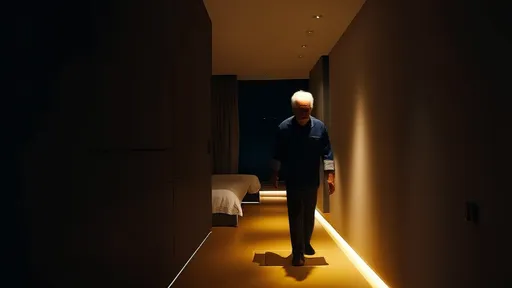
Modern lighting systems have moved far beyond simple plug-in nightlights. Motion-activated LED strips now offer sophisticated solutions that automatically illuminate when needed and dim when not in use. These systems can be installed at toe-kick height along walls or cabinetry, providing gentle pathway lighting without creating disruptive overhead glare. Some advanced models feature progressive illumination, where lights gradually brighten to full intensity over several seconds, allowing eyes to adjust naturally rather than being shocked awake by sudden brightness.
Biometric lighting represents the next frontier in age-appropriate illumination. Experimental systems can detect subtle movements through advanced sensors, distinguishing between routine sleep adjustments and actual attempts to rise from bed. This allows the lighting to activate preemptively, giving seniors illuminated pathways before their feet touch the floor. Other prototypes incorporate wearable technology that communicates with home lighting systems, ensuring perfect synchronization between the user's movements and the lighting response.
Design Considerations for Effective Implementation
Successful nighttime lighting schemes require thoughtful integration with existing architecture. Lighting designers emphasize the importance of creating continuous visual guides rather than isolated pools of light, which can actually worsen depth perception issues. The path should be illuminated from bed to bathroom and back, with special attention to transitional areas like doorway thresholds that frequently cause trips and falls. Many experts recommend installing additional lighting markers near medications or emergency call devices that might be needed during nighttime hours.
Color temperature selection plays a crucial role in effectiveness. While cool white light provides maximum brightness, many seniors find warmer tones (around 2700K) more comfortable at night as they're less likely to suppress melatonin production. Some systems now offer adjustable color temperatures that automatically shift throughout the evening - brighter cool tones during early nighttime hours when occasional wakefulness is more common, transitioning to warmer, dimmer light in the early morning hours when deeper sleep is preferred.
Psychological and Behavioral Aspects
The impact of well-designed nighttime lighting extends beyond physical safety. Geriatric psychologists note that reliable illumination reduces nighttime anxiety, which often leads to decreased fluid intake in attempts to minimize bathroom trips. This dehydration cycle creates its own set of health risks. Proper lighting gives seniors confidence in their nighttime mobility, encouraging healthier hydration habits and reducing fall-related anxiety that can lead to overly cautious movements actually increasing fall risk.
Sleep specialists caution against solutions that are too bright or improperly placed, as these can disrupt circadian rhythms. The ideal system provides enough light for safe navigation while maintaining the darkness needed for quality sleep. This balance requires careful positioning of fixtures and consideration of indirect lighting techniques that illuminate floors and pathways without shining directly into eyes or creating bright spots visible from bed.
Future Directions in Age-Specific Lighting Solutions
Emerging technologies promise even more sophisticated approaches to senior nighttime lighting. Researchers are developing systems that learn individual movement patterns over time, anticipating needs before they arise. These adaptive systems can distinguish between different family members, providing customized illumination based on each person's mobility requirements and preferences. Other experimental approaches involve subtle auditory cues paired with lighting changes to provide additional orientation assistance without being disruptive.
Smart home integration allows lighting systems to communicate with other devices, such as adjusting thermostat settings when nighttime activity is detected or notifying caregivers if unusual movement patterns occur. These interconnected systems create comprehensive safety networks that address multiple aspects of senior wellbeing simultaneously. As artificial intelligence continues advancing, lighting solutions may eventually predict and prevent potential hazards before they materialize.
The development of senior-friendly nighttime lighting represents more than just a technical challenge - it's a fundamental rethinking of how we support independence and dignity in later life. By illuminating these crucial pathways, we're not just lighting a physical space, but providing the confidence and security that allows seniors to maintain autonomy in their daily routines. As this field continues to evolve, it promises to transform nighttime from a time of vulnerability to one of comfort and safety for aging populations worldwide.
The frozen food industry has long grappled with the challenge of preserving food texture and quality during storage and transportation. Among the most delicate products are quick-frozen dumplings, where the management of ice crystals plays a pivotal role in determining the final product quality. Recent advancements in cryogenic technology have demonstrated that maintaining dumplings at -35°C can induce a glassy state that fundamentally changes how we approach frozen food preservation.
The Science Behind Glass Transition in Frozen Foods
When water undergoes freezing within food matrices, it doesn't simply transform into ice. The complex interplay between water molecules and food components creates a dynamic system where crystal formation can either preserve or destroy texture. At conventional freezer temperatures (-18°C), ice crystals continue to grow and recrystallize, damaging cell structures. However, when temperatures plunge to -35°C and below, something remarkable occurs - the system enters what physicists call the glass transition state.
In this glassy state, molecular motion slows to near standstill. Water molecules lose their ability to rearrange into crystalline structures, effectively freezing the food's microstructure in time. For dumplings, this means the delicate balance between wrapper and filling is preserved exactly as it was at the moment of freezing. The dough maintains its elasticity, while the filling's juices remain suspended in their original distribution rather than forming disruptive ice crystals.
Industrial Implementation Challenges
Transitioning from laboratory findings to industrial-scale production presents numerous hurdles. The first lies in achieving rapid and uniform cooling throughout the product. Traditional blast freezers often create temperature gradients, with the dumpling exterior cooling faster than the core. Modern spiral freezers with precise airflow control and cryogenic nitrogen injection systems have shown promise in overcoming this limitation.
Another critical factor is the formulation of the dumpling itself. The water content and its binding with proteins and carbohydrates significantly affect how the system behaves during cooling. Food scientists have developed specialized flour blends with modified starch profiles that enhance glass formation while maintaining the desired mouthfeel after reheating. Similarly, fillings now often include natural cryoprotectants like trehalose or specific protein hydrolysates that inhibit ice crystal growth even during temperature fluctuations.
Energy Considerations and Sustainability
The obvious drawback of -35°C storage is the increased energy demand. However, modern refrigeration systems have made significant strides in efficiency. Cascade refrigeration systems using CO2 as a secondary refrigerant have shown particular promise, with some facilities reporting energy savings of up to 30% compared to conventional systems. Additionally, the extended shelf life and reduced product loss often offset the higher operational costs.
Some forward-thinking manufacturers have begun integrating renewable energy sources with thermal storage systems. Solar-powered freezing facilities in sun-rich regions can produce ice during daylight hours that helps maintain low temperatures overnight. These innovations point toward a future where ultra-low temperature food preservation can be both quality-focused and environmentally responsible.
Quality Outcomes and Consumer Perception
The sensory differences between conventionally frozen and glass-state dumplings are immediately apparent upon cooking. Products preserved at -35°C exhibit wrapper textures nearly indistinguishable from fresh, with no signs of the sogginess or cracking that often plagues frozen varieties. Fillings retain their juiciness and structural integrity, with meat particles maintaining better bite and vegetable components showing brighter colors and crisper textures.
Consumer trials have revealed interesting psychological effects as well. When presented side-by-side with identical recipes frozen at different temperatures, test groups consistently rated the -35°C samples higher across all sensory parameters, even when unaware of the freezing conditions. This suggests that the textural improvements translate directly to perceived quality, potentially allowing manufacturers to command premium pricing.
Microbiological Advantages Beyond Texture
While texture preservation drives much of the interest in glass-state freezing, the microbiological benefits shouldn't be overlooked. At -35°C, not only is microbial growth completely halted, but the viability of existing microorganisms decreases more rapidly than at higher freezing temperatures. Studies have shown significant reductions in viable counts of common spoilage organisms after storage at glass transition temperatures compared to standard frozen storage.
This has important implications for food safety, particularly with products containing raw components in their fillings. The enhanced microbial stability also allows for extended best-before dates without compromising safety, reducing food waste throughout the supply chain. Some manufacturers are now exploring how these extended shelf lives might enable new distribution models, including direct-to-consumer frozen food subscriptions.
Future Directions in Glass-State Freezing
Emerging research points to even more sophisticated applications of these principles. Some laboratories are experimenting with variable-rate freezing protocols that optimize crystal management by carefully controlling the temperature descent curve. Others are investigating how high-pressure processing might synergize with ultra-low temperatures to create even more stable glass states at slightly higher temperatures.
Another promising avenue involves the use of electromagnetic field-assisted freezing. Preliminary results suggest that carefully tuned electromagnetic pulses can influence water molecule orientation during freezing, potentially enhancing glass formation while reducing energy requirements. While these technologies remain in development, they hint at a future where frozen dumplings could rival fresh products in quality while offering unparalleled convenience.
The journey from traditional freezing methods to precision glass-state preservation represents more than just a technical upgrade - it's a fundamental rethinking of how we approach food preservation. As these technologies mature and become more accessible, consumers worldwide may soon enjoy frozen dumplings that defy all expectations of what frozen food can be.
By /Aug 6, 2025
By /Aug 6, 2025
By /Aug 6, 2025
By /Aug 6, 2025
By /Aug 6, 2025

By /Aug 6, 2025
By /Aug 6, 2025
By /Aug 6, 2025
